
When a Genshin Impact Waypoint Map Became a Philosophy Lecture
Genshin Impact's teleport waypoints teach shortest route efficiency, sparking viral philosophy lectures on game design.
It was an ordinary Tuesday afternoon in 2021, but for the students settling into their philosophy lecture, something extraordinary was about to unfold. The hum of conversation died down as the professor dimmed the lights and turned on the projector. Then, a collective gasp rippled through the room. On the screen, instead of the usual dense bullet points or diagrams of ethical frameworks, there glowed a familiar golden-hued map of Mondstadt — complete with the unmistakable markers of Genshin Impact’s teleport waypoints. 📍
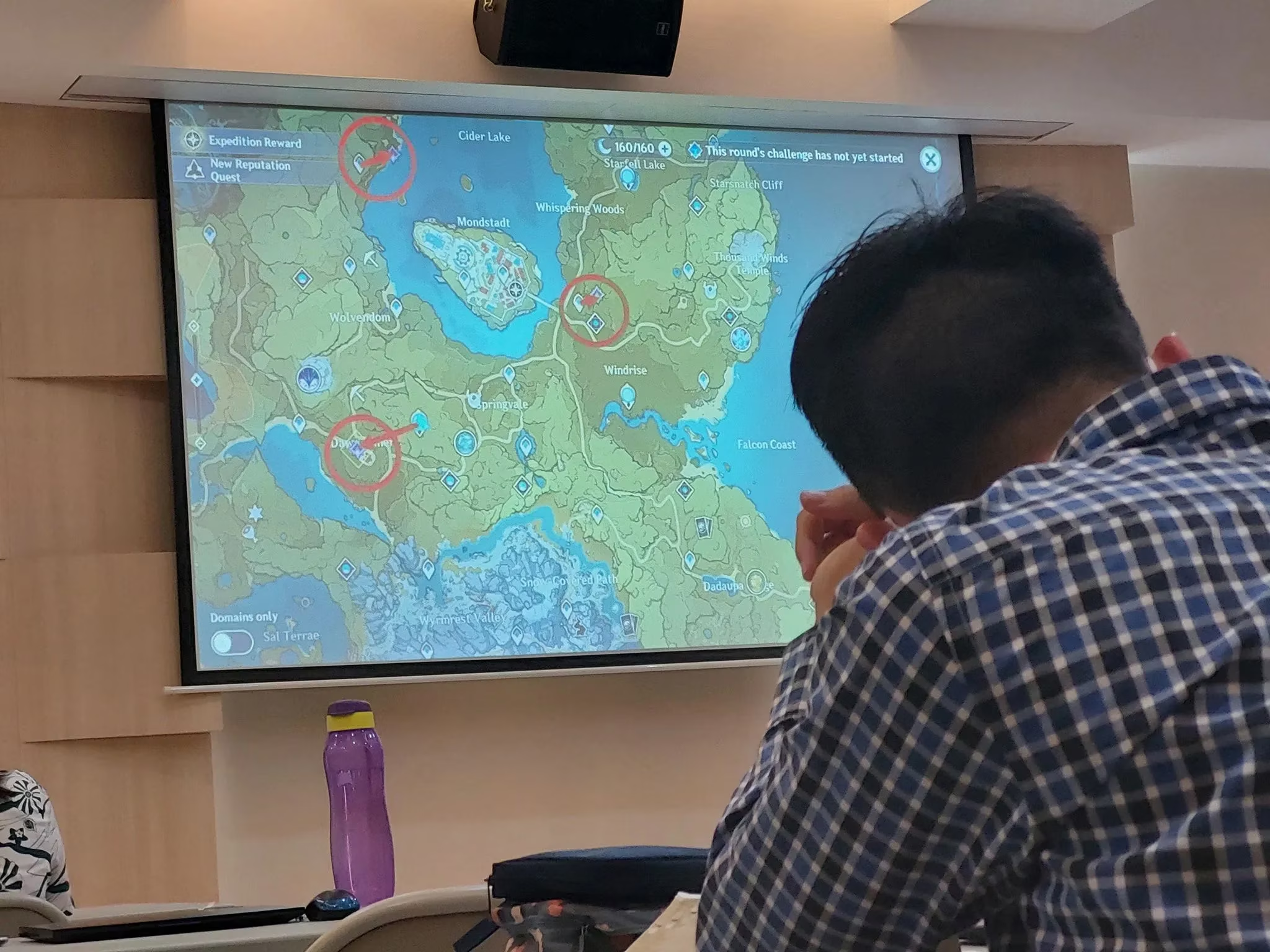
One student, barely believing her eyes, whispered to a friend: “Is this real? Is our professor actually using a video game map to teach us philosophy?” The sight was so unexpected, so wonderfully absurd, that she quietly snapped a photo and shared it online. It wasn’t long before the image went viral, capturing the hearts of gamers and academics alike.
The professor, unfazed by the murmurs, gestured towards the map. “Take a look at these waypoints,” she said, her voice calm and assured. “Now, imagine you are standing at the Dawn Winery, and you need to get to Mondstadt city. You have a choice: walk the long, winding path through the countryside, or simply teleport using one of these. Which one do you choose?”
Most students, like any experienced Traveler, immediately pointed to the nearest waypoint. Why? Because, as the professor revealed, human beings are naturally wired to take the shortest route possible to complete a task. Whether it’s navigating a sprawling fantasy world or deciding which career move to make, the mind seeks efficiency. What made the lecture so brilliant was how it used Genshin Impact as a living, breathing example of a fundamental truth about human cognition and behavior. 😲
The teleport system in Teyvat is not just a convenience — it’s a deliberate design choice that reveals deep insights into how players interact with open-world games. The professor elaborated on this further, diving into the delicate dance between exploration and pace. Too much walking, and a game feels sluggish; too many shortcuts, and the world loses its sense of scale and discovery. Genshin Impact’s waypoints strike that balance masterfully, offering fast travel without destroying the joy of stumbling upon a hidden chest or a breathtaking view. 🌄
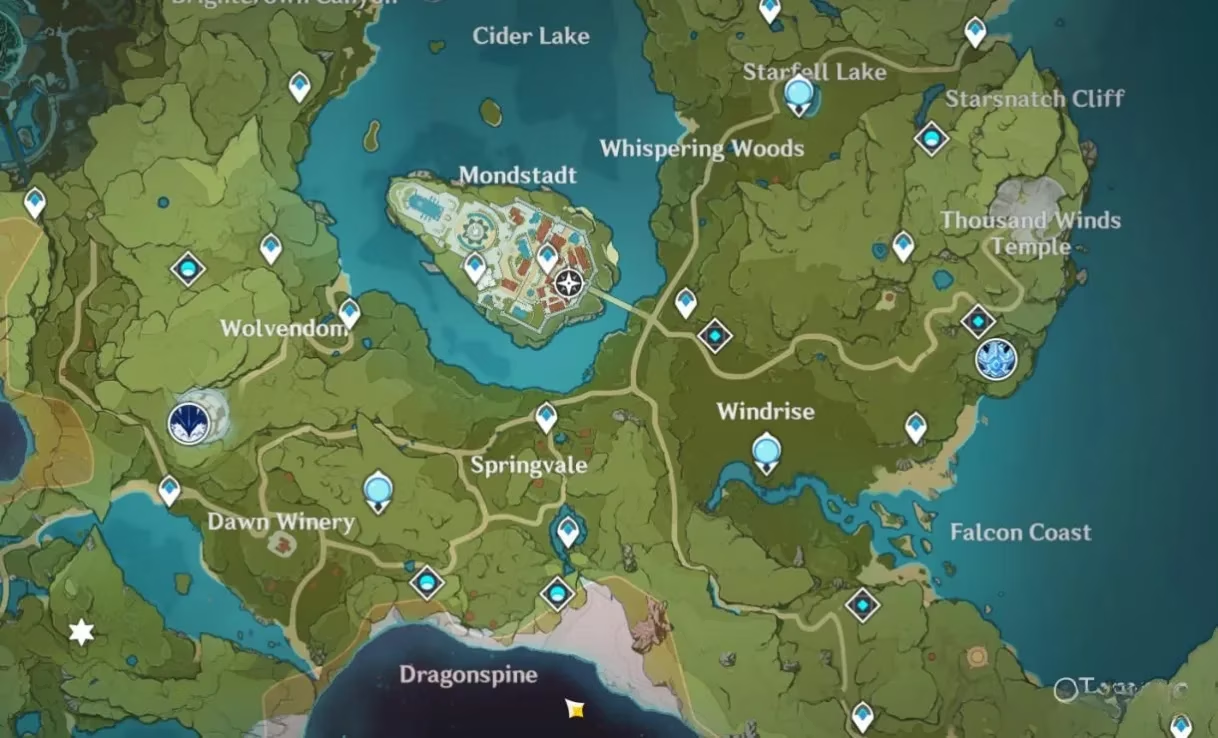
From there, the lecture unfolded into a broader discussion about game design as a mirror of human psychology. Video games, she explained, are not just mindless entertainment. They are intricate systems designed to capture attention, reward curiosity, and guide behavior. In an open-world title like Genshin Impact, the developers at HoYoverse had to answer a critical question: how do you create a massive, explorable landscape without exhausting the player? The answer lay in the waypoints — scattered across the map like breadcrumbs, each one inviting players to venture further, knowing they could always zip back to safety or dive into action with a single click. 📈
For the students, the revelation was electrifying. Many of them had played the game for hundreds of hours without ever stopping to think about why the waypoints were placed where they were. The professor had transformed their after-school pastime into a lesson on cognitive load, decision-making, and the architecture of motivation. And she did it with a smile, fully aware that she had turned a classroom into a bridge between academia and the vibrant culture of modern gaming.
The viral Facebook post sparked a wave of reactions. Comments flooded in, ranging from “I wish my professor was this cool” to thoughtful debates about the educational potential of video games. Some wondered if this was an isolated stunt, but the professor had bigger plans. By 2026, the world of education had shifted dramatically. Game-based learning was no longer a niche experiment — it had become a respected pedagogical tool. That very philosophy professor went on to launch an interdisciplinary course titled “Virtual Worlds and the Human Condition,” where students analyzed everything from Genshin Impact’s narrative structures to the ethical dilemmas in other games. The waypoint map lecture became legendary, often cited in articles about how digital spaces can illuminate classical philosophical concepts.
What made the moment so special, even five years later, was its sheer sincerity. It wasn’t a marketing gimmick or a desperate attempt to seem “hip.” It was an educator seeing the world her students lived in and finding a genuine connection. She recognized that the virtual journeys they took every evening held real lessons about human nature. In a time when screens often divide generations, that one map of Mondstadt brought a whole classroom together. ✨
Looking back, the story carries a gentle reminder: games are more than just pixels and code. They are experiments in how we think, choose, and feel. The shortest path isn’t just a waypoint — it’s a window into the mind. And sometimes, that window is opened in the most unexpected place of all: a philosophy lecture.
For those who find themselves inspired by the philosophy lecture and eager to dive deeper into the world of gaming, there's always something new to explore. Whether it's discovering unique narratives or engaging in challenging gameplay, the landscape is vast and ever-evolving. These virtual adventures not only offer entertainment but also serve as a canvas where players can continue contemplating the lessons learned in the classroom.
If you're looking to expand your gaming library and experience more of these thought-provoking worlds, you might want to check out some game deals today. Websites like DealNest provide a gateway to a variety of games, offering opportunities to explore new stories and mechanics without breaking the bank. Who knows what philosophical insights you might uncover next?
Comments