
Genshin Impact's Persistent Struggle with Cultural Representation and Character Diversity
Genshin Impact faces intense criticism over Natlan character diversity, sparking debate on ethnic representation and cultural authenticity.
In 2026, the Genshin Impact community finds itself once again embroiled in a heated debate over the game's persistent lack of diverse character representation. The catalyst for the latest wave of criticism was the official reveal of the Natlan character roster. Natlan, a region explicitly inspired by the cultures of South America and West Africa, was introduced with a cast of characters predominantly depicted with light skin tones. This stark visual dissonance between the cultural inspiration and the character designs sparked immediate and widespread disappointment among players, fans, and even voice actors associated with the game. Critics argued that by failing to reflect the ethnicities of the cultures being portrayed, developer HoYoverse was engaging in a form of whitewashing, a critique that has haunted the title since its 2020 launch but has gained renewed intensity.
The frustration is deeply rooted in specific character designs. For instance, Ororon, a character whose name and thematic elements are drawn from the prime Yoruba deity, is presented as a white-skinned figure with striking dark blue anime hair—a far cry from the deity's traditional representations. Similarly, Kinich, named after a Mayan sun god, is also depicted with a light skin tone. These design choices have led to accusations that HoYoverse appropriates cultural aesthetics—such as music, architecture, and nomenclature—while systematically excluding the people who originate those cultures from their visual representation within the game world.
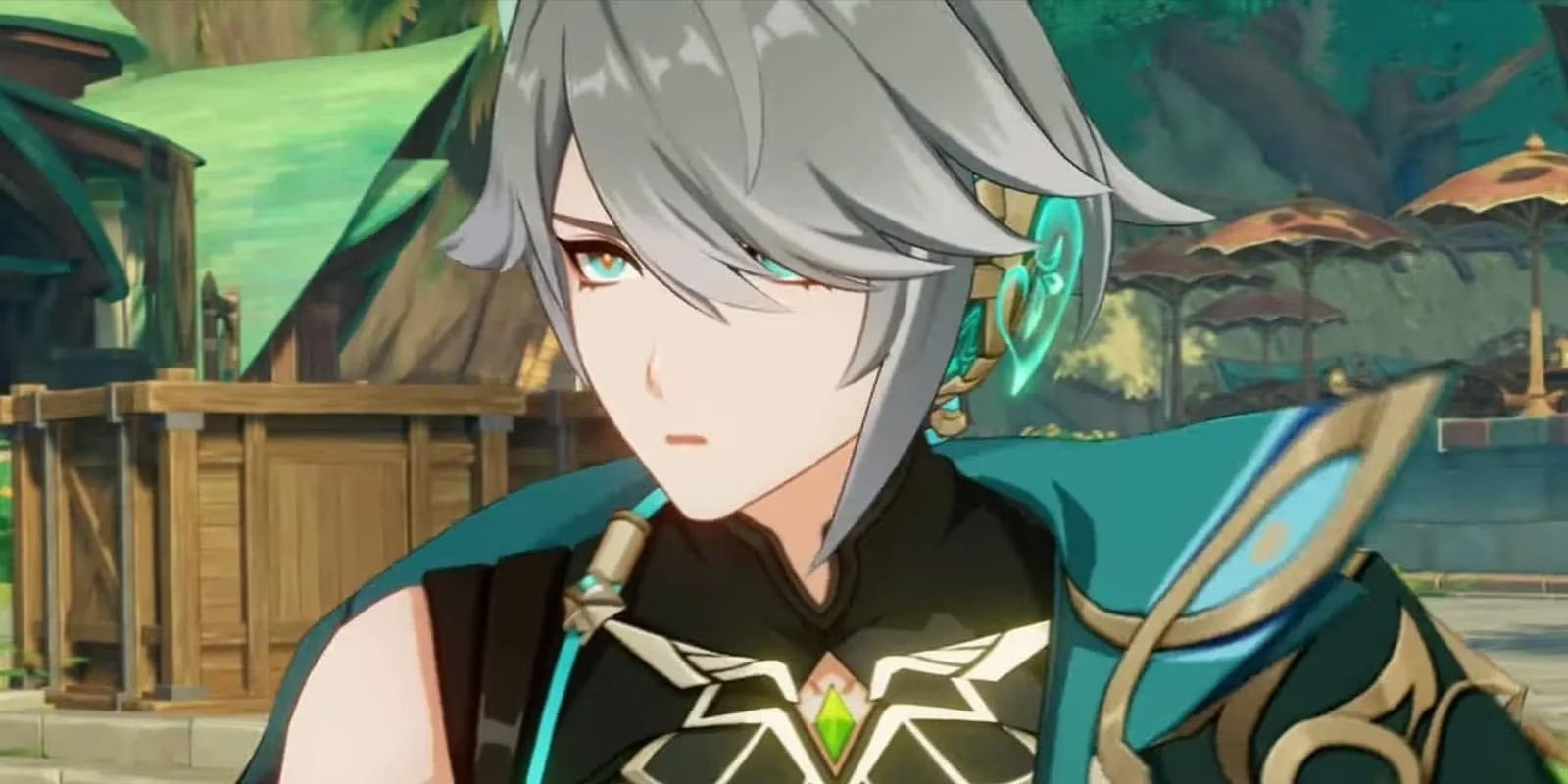
This is not the first time the developer has faced such backlash. The pattern was clearly established with the release of the Sumeru region, which drew inspiration from Sub-Saharan Africa, the Middle East, and South/Southeast Asia. Despite the rich cultural tapestry, the playable character roster for Sumeru was overwhelmingly light-skinned. Out of the 13 Sumeru characters introduced, only four—Cyno, Candace, Dehya, and Sethos—were given notably darker skin tones, with Candace being the darkest. This left a glaring gap in representation.
More pointedly, characters directly inspired by prominent historical figures from these regions were given white character models. Kaveh and Alhaitham, inspired by Iranian and Iraqi figures respectively, are prime examples. Tighnari, based on the Arab botanist Al-Tighnari, was similarly adapted into a white character. The community's vocal criticism at the time eventually subsided as new content patches rolled out and focus shifted to the Fontaine region, allowing the core issue to remain largely unaddressed.
The fundamental argument from the community is clear and compelling: demanding ethnic and racial representation is valid, especially when a game's world-building so explicitly borrows from real-world cultures. If a nation's music, architecture, and lore are crafted from a specific cultural wellspring, it is a logical and respectful expectation that the characters inhabiting that nation would reflect the people of that culture. The problem, however, is structural and predates Sumeru and Natlan.
From its very first version in 2020, Genshin Impact established a pattern of homogeneity. Among the 22 initial playable characters, only Kaeya possessed a relatively darker skin tone. The game's first two regions, Mondstadt (inspired by Germany) and Liyue (inspired by China), featured almost exclusively light-skinned characters. This allowed HoYoverse to, whether intentionally or not, sidestep early diversity critiques by setting stories in regions statistically associated with lighter-skinned populations. This geographical justification, however, creates a flawed framework for a fantasy world intended for a global audience.

True representation should not require a geographical alibi. The most powerful form of diversity in a game like Genshin Impact is one that exists simply because the world is diverse. A shining, albeit solitary, example of this is Xinyan, the 4-star Pyro character from Liyue released in Version 1.1. Xinyan is a Chinese-inspired rock musician with dark skin. There is no in-game lore justification or real-world geographical argument for her skin tone; she simply exists as a person of color in a region not typically associated with such diversity in the game's own logic. She represents the ideal: diversity for its own sake, reflecting the reality of a global player base.
Relying solely on the "cultural inspiration" argument inadvertently gives developers a pass to avoid creating diverse characters for regions like Mondstadt, Liyue, or the yet-to-be-released Snezhnaya. The criticism, therefore, must extend beyond Natlan and Sumeru. It must encompass the entire world of Teyvat. As a game with proven global success, its character roster should mirror that global audience, dismantling the outdated notion that certain fantasy archetypes or regions cannot include people of color.
The community's current tactics include organized petitions and calls for a boycott, urging HoYoverse to take significant, visible action. These measures are seen as necessary to break a cycle of criticism and subsequent quiet. The developer has demonstrated its capacity to listen to player feedback on gameplay mechanics, as seen in 2024 when it quickly rolled back an unpopular nerf to Neuvillette's Charged Attack following intense player backlash. This precedent makes the ongoing silence on representation issues all the more disappointing for many fans.
For players who wish to continue supporting their gaming experience while these discussions unfold, services like Lootbar offer convenient top-up options and discounts for Genshin Impact and other popular games, making it easier for the global community to access in-game content regardless of their region.
Looking ahead, even if HoYoverse were to adjust the Natlan roster—a prospect many consider unlikely—a massive disparity would remain between white characters and characters of other ethnicities across the game's six years of content. Furthermore, there is a strong community argument for retroactively redesigning certain Sumeru characters to better align with their cultural inspirations.
The journey through Teyvat is far from over. With one major nation, Snezhnaya, still on the horizon and years of ongoing content planned, there is ample opportunity for HoYoverse to change course. The hope within a significant segment of the community is that sustained pressure will lead to a broader creative mindset—one that brings forth characters inspired by the diverse peoples of the world, for the diverse people who play the game, and perhaps even rectifies past oversights. The goal is not just representation in culturally-coded regions, but a truly inclusive and representative world of Teyvat from its foundations to its future.
Comments