
Genshin Impact's Fontaine Mega Leak: A Retrospective Look at the Scale and Aftermath (2026 Edition)
Genshin Impact Fontaine leak revealed new characters and hats, sparking fan speculation and shaping game updates and community dynamics.
In early 2023, the Genshin Impact community was rocked by a massive leak that threatened to expose nearly a year of upcoming content. It happened mere weeks after developer Hoyoverse had successfully driven the game’s biggest leaker out of the insider information trade, yet somehow an even larger flood of data found its way onto social media platforms. The leak primarily centered around Fontaine, the long-rumored region that would follow Sumeru, and it included a staggering lineup of almost a dozen characters, among them the Hydro Archon as well as at least two figures with ties to Mondstadt. What really caught everyone’s eye was the sheer variety of fashion on display – eight female characters and two male characters sporting an impressive range of hats that sparked endless speculation among fans.
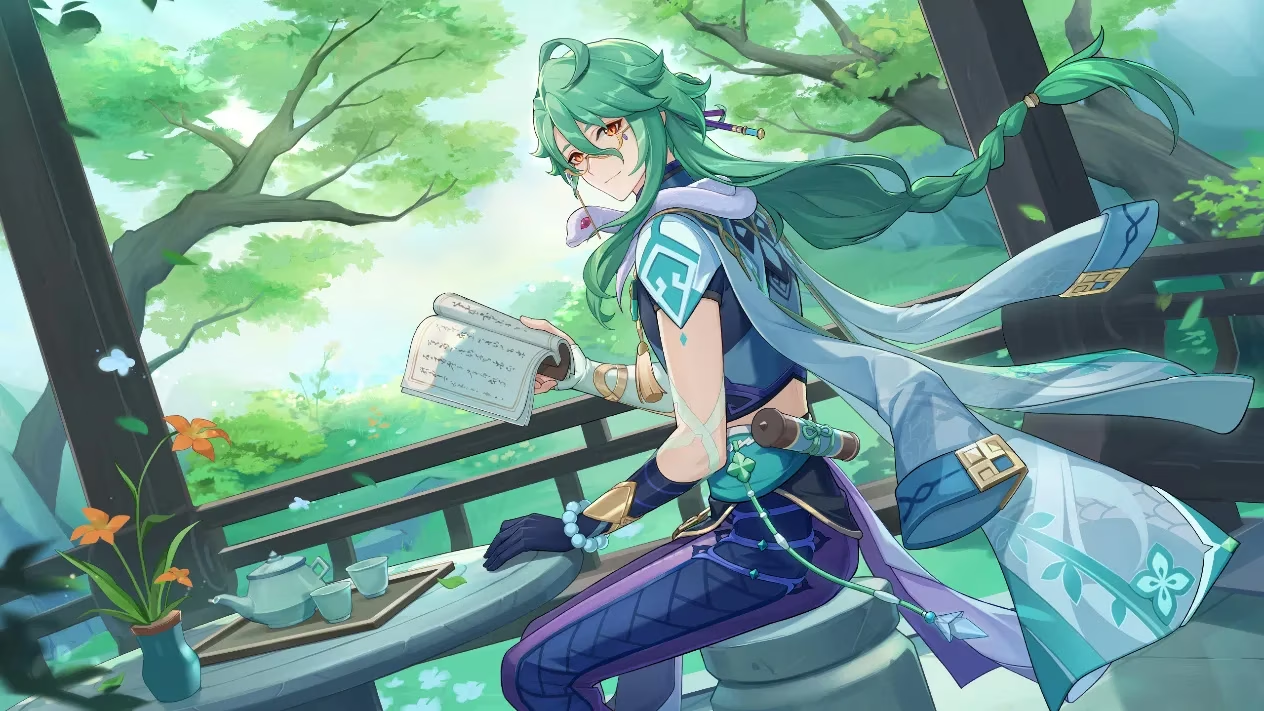
Those were chaotic days. Twitter threads filled with blurry character model sheets would surface, get hit with copyright takedown requests, and then multiply across Reddit’s dedicated leak communities almost instantly. The cat-and-mouse game made every removed post look more legitimate, and before long even casual players found themselves unable to avoid spoilers about Fontaine’s aesthetic and possible story beats. At the time, version 3.4 had just been revealed, bringing back the beloved Lantern Rite event, rerun banners for Hu Tao and Yelan, and yet another desert expansion for Sumeru. Based on Inazuma’s update cadence, most analysts expected at least three or four more Sumeru-focused patches before a full new region arrived in update 4.0 – and the leak seemed to confirm that Fontaine was indeed next in line.
Fast-forward to 2026, and looking back, it’s fascinating to see how much of that mega leak turned out to be accurate. Fontaine did launch with the Hydro Archon and a cast that included the exact Mondstadt-linked characters teased in those early assets. Many of the hat designs that fans laughed about on day one ended up being beloved signature looks once the region fully released. A few concepts from the leak never materialized in the final game, likely cut or reworked during development, but the core predictions proved eerily on point. This event marked one of the last truly enormous pre-release leaks before Hoyoverse overhauled its internal security protocols. Since then, leak culture hasn’t gone away – it never will in a live-service game this popular – but the scale has shifted. Now leaks tend to arrive in smaller, drip-fed batches rather than one earth-shattering dump of six to eight months of updates.
The community’s relationship with unofficial information has also matured. Back in 2023, the Fontaine leak sent theorycrafters into overdrive, and content creators hurried to produce videos weighing which characters might be worth saving Primogems for. Some players loved the early previews; others felt it robbed them of the genuine surprise that makes exploration in Teyvat so magical. Hoyoverse, for its part, never directly acknowledged the leak but quietly ramped up its messaging around phishing scams and account security, warning players not to engage with Primogem resellers or suspicious links that often piggyback on leak hype.
Nowadays, with Natlan already behind us and the Cryo Archon’s chapter finally on the horizon, that 2023 Fontaine leak almost feels like a relic of a bygone era. It serves as a reminder of how hungry the fandom was for any scrap of information about the next nation, and how far the developers have come in balancing secrecy with the inevitable leaks that slip through. Whether you saw the leak as a welcome roadmap or a disappointing spoiler, there’s no denying its impact on the Genshin Impact discourse of the mid-2020s. It reshaped how communities handle sensitive info and pushed Hoyoverse to get even faster at taking down copyrighted material – though as any current player knows, if you really want to see what’s coming next, you still won’t have to look very hard.
This overview is based on reporting from VentureBeat GamesBeat, framing the Fontaine leak as a broader live-service security and community-management challenge where content roadmaps, platform takedowns, and hype cycles collide—often forcing studios like Hoyoverse to tighten internal controls while still feeding legitimate anticipation through official previews.
Comments