
Genshin Impact Game Age and Anniversary Timeline
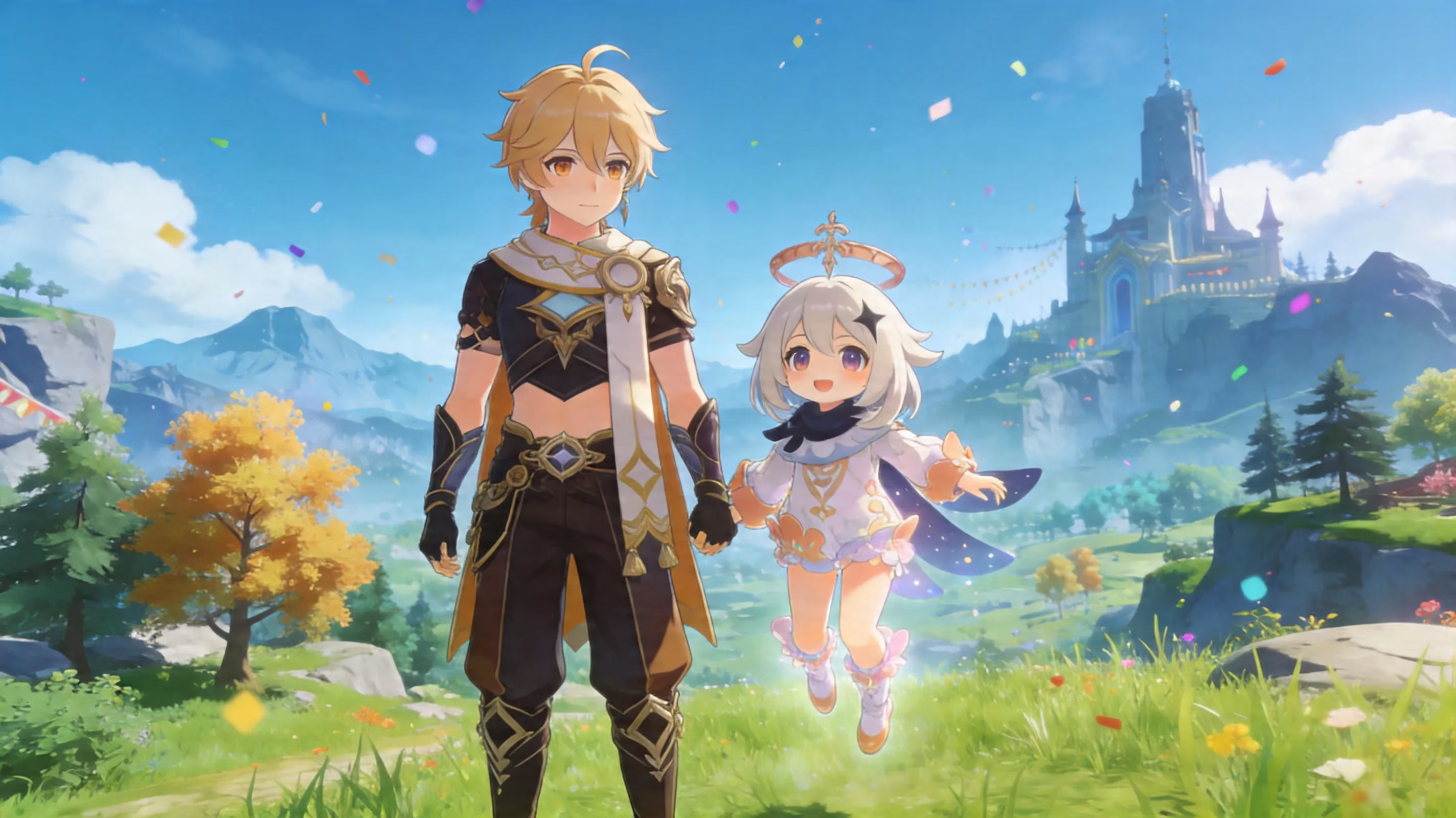
Discover the remarkable longevity of Genshin Impact, a free-to-play open-world RPG that launched in 2020 and has impressively grown into its sixth year by 2026. This enduring live-service game continues to captivate players with expansive updates and a compelling ongoing narrative.
If you've been wondering how old is Genshin Impact in 2026, the quick answer is pretty simple: the game launched worldwide on September 28, 2020. That means it has been running for more than five years and is now in its sixth active year of live service. For a free-to-play open-world RPG, that is a seriously impressive run, especially for a title that has grown from a Mondstadt-focused launch into a massive long-term project spanning multiple nations, major system overhauls, and one of gaming's biggest ongoing story arcs.
Released by miHoYo, now known as HoYoverse, Genshin Impact has gone from a huge debut to one of the most successful live-service games on the market. So when players ask how old the game is, they are usually asking about more than just the date. They also want the bigger picture: when it released, how its platform rollout happened, how the version eras changed the game, and whether jumping in during 2026 still makes sense.
How Old Is Genshin Impact in 2026
As of 2026, Genshin Impact is 5 years and several months old, and it passed its fifth anniversary on September 28, 2025. That anniversary closed out the game's fifth year and kicked off year six, which puts Genshin in the same broader conversation as other long-running live-service RPGs like Final Fantasy XIV and Path of Exile. Honestly, that is a big deal for a game that some early critics brushed off as just another Breath of the Wild copy.
Its fifth anniversary lined up with the Version 5.x period, bringing major story developments, high-interest limited banners, and the kind of engagement spike Genshin tends to see every anniversary season. That recurring surge says a lot about the game's staying power. It is not just new players checking it out; the existing player base keeps coming back in force.
| Milestone | Date |
|---|---|
| Global Launch (Version 1.0) | September 28, 2020 |
| First Anniversary | September 28, 2021 |
| Second Anniversary | September 28, 2022 |
| Third Anniversary | September 28, 2023 |
| Fourth Anniversary | September 28, 2024 |
| Fifth Anniversary | September 28, 2025 |
| Current Age (2026) | 5+ years, sixth year active |
Genshin Impact Release Date and Platform Timeline
Genshin Impact Version 1.0, titled "Welcome to Mondstadt," launched on September 28, 2020. It released globally on PC through the official HoYoverse launcher and Epic Games Store, along with iOS and Android. For a studio of miHoYo's size at the time, that kind of day-one multi-platform launch was ambitious, and it made it clear right away that the game was aiming for a huge audience.
PS4 followed on November 9, 2020, about six weeks later, giving console players access to the same account ecosystem and cross-progression support. Then came the native PS5 version on April 28, 2021, which added 4K support, 60 FPS, and DualSense haptics that made elemental combat feel way better than many expected.
The Xbox rollout took much longer. Genshin finally landed on Xbox Series X/S on November 20, 2024, and early adopters got an exclusive cosmetic item alongside the launch. In September 2025, HoYoverse also released a native HarmonyOS NEXT version for Huawei devices. Nintendo Switch, meanwhile, is still the big missing platform. It was announced back in 2020, but by 2026 most observers expect HoYoverse to wait for newer Nintendo hardware instead of pushing a release on the original Switch.
Genshin Impact Update Timeline by Era
Version 1.x to 2.x
The 1.x era is where Genshin locked in its core identity. Mondstadt worked as the onboarding region, teaching players the basics of Anemo reactions, gliding, exploration, and the wish system. Liyue expanded that formula in a much bigger way, adding a Geo-themed nation inspired by Chinese landscapes and mythology. Even now, it is still one of the richest regions in terms of content density.
This was also the period when the game's six-week patch rhythm became the norm. Version 1.1 introduced Tartaglia, while Version 1.3's Lantern Rite showed players that seasonal and culture-inspired events were going to be a long-term pillar of the game.
Then Version 2.0 arrived in August 2021 with Inazuma, and that was the first time the game's tone shifted in a major way. The Electro nation brought in the Raiden Shogun, who quickly became one of the most influential support units in Genshin's history. Inazuma also leaned harder into puzzle-based exploration and elemental interaction, asking players to engage with team-building in a more deliberate way while pushing the main Teyvat story forward.
Version 3.x to 4.x
Version 3.0 launched Sumeru in August 2022, and this was one of the biggest gameplay shake-ups Genshin had ever seen. The arrival of Dendro did not just add another element to the roster. It introduced entirely new reaction families like Bloom, Quicken, Hyperbloom, and Burgeon, which changed how players thought about team comps from the ground up.
That shift hit the meta hard. A lot of previously dominant setups lost their grip, and theorycrafters suddenly had a fresh sandbox to work with. For many veteran players, Sumeru felt like a reset button in the best possible way.
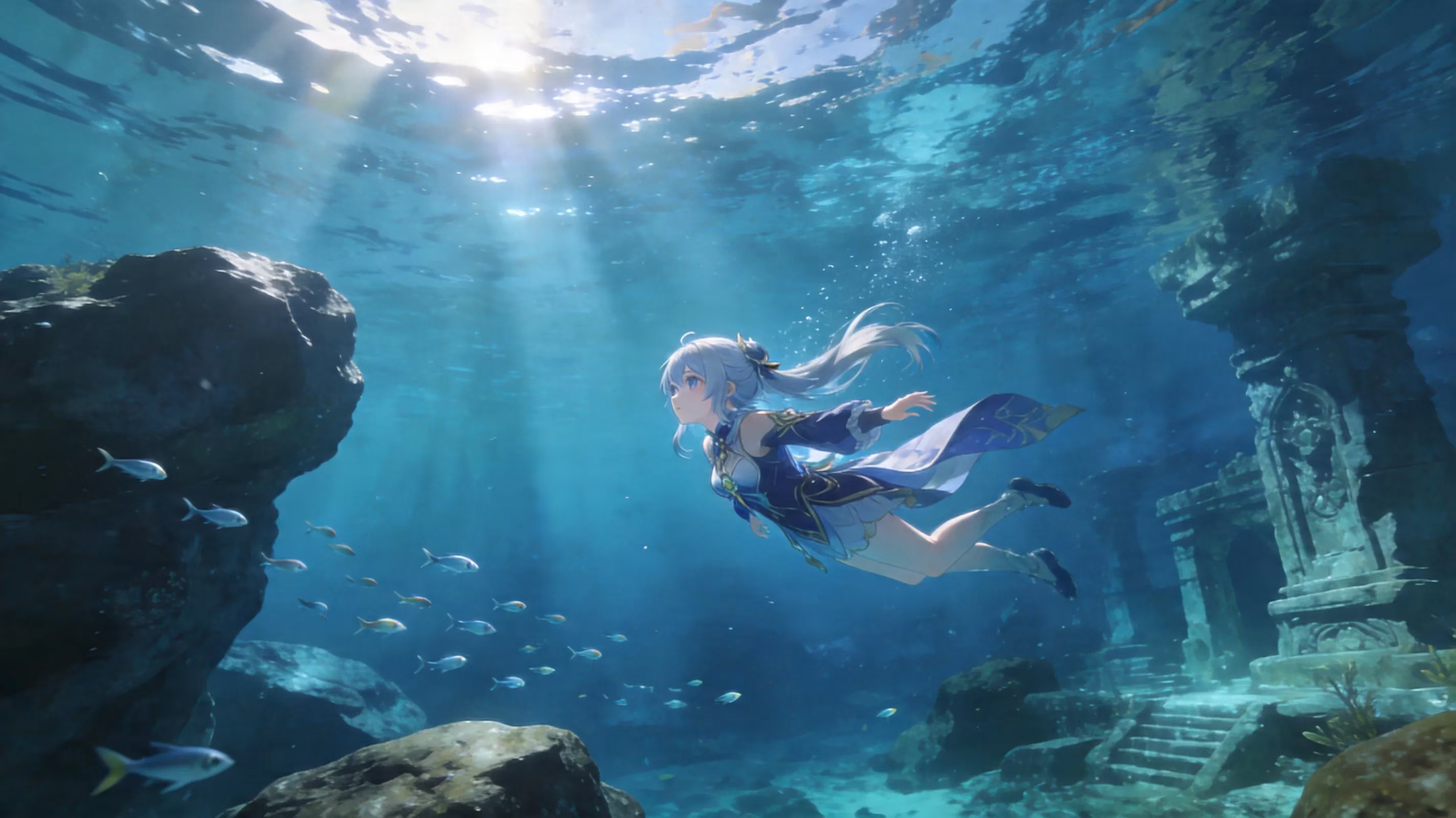
Fontaine followed with Version 4.0 in September 2023. This Hydro nation brought underwater traversal, which was a huge technical leap for the game. HoYoverse had to build new movement, combat, and navigation systems to make it work, and the result felt distinct rather than gimmicky.
On top of that, Fontaine's story arc earned a reputation as the strongest narrative stretch Genshin had delivered up to that point. Between the cinematic presentation and the voice work, it genuinely felt closer to what you would expect from a premium single-player RPG.
Version 5.x to 6.x
Natlan arrived during the Version 5.x cycle and gave the game a very different exploration identity. Its Saurian companion mechanics changed overworld movement in a much more flexible way than Fontaine's underwater zones did. Depending on the Saurian type, players could fly, burrow, or sprint at high speed, which made traversal feel fresh again.
Combat in Natlan also carved out its own niche. The region leaned into aggressive Pyro-focused gameplay and buff-stacking team structures, giving it a clear combat identity rather than just another visual theme.
By 2026, Genshin is well into the Version 6.x era, with the Snezhnaya arc pushing the Archon Quest toward what many expect to be one of the biggest narrative payoffs in the game's lifespan. Nod Krai has expanded the exploration side even further, and later-version creative tools with user-generated elements show that HoYoverse wants to keep veteran players engaged with more than just the usual event loop.
How Much Genshin Impact Has Changed Since Launch
A lot, honestly. The playable roster has gone from around two dozen launch characters to well over 100 by 2026. With that kind of growth, power creep was always going to happen, and it definitely has. Characters like Ganyu and Hu Tao, once seen as top-end DPS benchmarks, no longer sit alone at the ceiling as newer units bring more layered kits and higher damage potential.
At the same time, HoYoverse has made the banner system easier to navigate than it used to be. Reruns are more structured, and there are now constellation-lite style upgrade systems that let players gain meaningful value without fully chasing duplicates.
The quality-of-life side is where the difference feels even bigger. The old soft pity setup eventually gave way to a clearer guaranteed-pity structure, which made banner planning much less frustrating. Resin, one of the most criticized systems at launch, has been adjusted multiple times through cap and regeneration changes. And then there are entire features that simply did not exist in Version 1.0:
-
Serenitea Pot for housing and customization
-
Teapot companion interactions for extra side content
-
Imaginarium Theater as an additional endgame mode
Endgame itself is no longer just Spiral Abyss. Imaginarium Theater added a roguelike-style rotation format, and newer domain challenges with special mechanical modifiers now give players more to do than just repeat the same floor clears. Cross-save has been stable for years, and performance on stronger hardware is way ahead of where it was at launch. On PS5 and Xbox Series X especially, load times are near-instant and frame rates stay far more consistent, even in Natlan's busiest combat scenes.
Is Genshin Impact Still Worth Starting in 2026
For most new players, the biggest concern is not combat or gacha. It is the backlog. By 2026, Genshin has stacked up more than five years of Archon Quests, Story Quests, and World Quests, which adds up to hundreds of hours if you want to see everything. The good news is that the game does not force you to rush. Story content is self-paced, and later patches added catch-up thresholds that let newer players join live events without having to clear every single chapter first.
The free-to-play question is a little more mixed, but still favorable overall. You can absolutely play Genshin at a high level without spending money. The pity system means a five-star usually lands somewhere around 75 to 90 wishes, and Welkin Moon remains one of the best-value low-spend options if you do want a small boost.
The real pressure comes from limited banners. If a character you want is running now and another favorite is coming soon, your Primogem planning gets tight fast. That is why keeping up with patch preview livestreams matters so much. If you know what banners are coming, you are much less likely to burn resources and regret it later.
Platform choice mostly depends on how you like to play:
-
PC: Best visuals and the most flexible controls and UI setup.
-
PS5: The smoothest console experience, with excellent performance and strong DualSense support.
-
Mobile: Best if you prefer shorter sessions or want portability.
-
Xbox Series X/S: Fully supported now, with content parity and solid performance.
Cross-progression is the clutch feature here. You are not locked into one ecosystem, which is still one of the most player-friendly things HoYoverse has done with Genshin.
Genshin Impact Age FAQ
How old is Genshin Impact exactly
As of late 2026, Genshin Impact is about 6 years old. It launched on September 28, 2020, and passed its fifth anniversary in September 2025. In month terms, that puts it at more than 70 months of continuous live-service operation, which is a major milestone for any online game.
When did Genshin release globally
Genshin Impact released globally on September 28, 2020. That launch date applied to PC, iOS, and Android, while PS4 followed on November 9, 2020. The launch build was Version 1.0, and since then the game has mostly stuck to its standard six-week patch cycle.
What version is Genshin now
In 2026, Genshin Impact is in the Version 6.x patch cycle. The exact sub-version changes on the usual 42-day schedule, but the broader context is the same: the game is now focused on Snezhnaya and nearby story content, which places it in the later stages of the original seven-nation arc first outlined back in Version 1.0.
How old is your account
If you want to check your own account age, the easiest way is through the UID registration date in the HoYoverse account management portal or by looking through in-game history logs. Lower UIDs generally belong to players who joined during the 2020 launch period or open beta window, while higher UIDs point to later registration periods. Your account age does not directly increase power, of course, but older accounts usually have more Primogems spent, more constellations unlocked, and more refined weapons built up over time.
Conclusion
The short version is easy: Genshin Impact launched on September 28, 2020, celebrated its fifth anniversary in 2025, and is now in its sixth year of live service in 2026. That timeline covers seven playable nations, more than 100 characters, multiple meta shake-ups led by Dendro and Natlan, and a steady pattern of HoYoverse expanding both the scale and polish of the game.
If you are thinking about starting now, the backlog is definitely big, but you do not need to sprint through it. The F2P model is still workable, platform support is stronger than ever, and the game's age is less a warning sign than proof that Teyvat has held up for the long haul.
Comments